

Can optical bench equipment be used for colorimetry experiments?
Leave a message

Can optical bench equipment be used for colorimetry experiments? That's a question I often get asked as a supplier of Optical Bench Equipment. And the short answer is yes! But let's dive a bit deeper into this topic.
First off, let's understand what colorimetry is. Colorimetry is the science of measuring colors. It involves quantifying the intensity of light at different wavelengths to determine the color of a sample. This is super important in a bunch of fields, like chemistry, biology, and even in the food and beverage industry. For example, in a chemistry lab, you might use colorimetry to figure out the concentration of a particular substance in a solution. In the food industry, it can be used to ensure that the color of a product meets certain standards.
Now, let's talk about optical bench equipment. An optical bench is basically a platform where you can set up and manipulate optical components like lenses, prisms, and light sources. It provides a stable and precise environment for conducting optical experiments. The great thing about optical benches is that they offer a high degree of control over the path of light. You can adjust the position, angle, and intensity of the light source, as well as the orientation of the optical components.
So, how can optical bench equipment be used for colorimetry experiments? Well, one of the key components in a colorimetry experiment is a light source. On an optical bench, you can choose a light source that emits light across a wide range of wavelengths. This is crucial because different substances absorb light at different wavelengths. For example, a blue substance might absorb red light more strongly than blue light. By shining a broad - spectrum light on a sample and then analyzing the light that passes through it, you can determine the absorption spectrum of the sample.
Another important part of a colorimetry setup on an optical bench is a detector. The detector measures the intensity of the light that passes through the sample. You can place the detector at a specific position on the optical bench to ensure accurate measurements. And since the optical bench allows for precise positioning, you can minimize errors in your measurements.
Let's take a look at a simple colorimetry experiment using optical bench equipment. Suppose you want to measure the concentration of a colored dye in a solution. You start by setting up a light source on one end of the optical bench. Then, you place a cuvette filled with the dye solution in the path of the light. After that, you position a detector on the other side of the cuvette to measure the intensity of the light that passes through the solution.
As the light passes through the solution, some of it is absorbed by the dye. The amount of light absorbed is proportional to the concentration of the dye in the solution. By comparing the intensity of the light before and after it passes through the solution, you can calculate the absorbance of the solution. And using Beer - Lambert's law, you can then determine the concentration of the dye.
One of the advantages of using optical bench equipment for colorimetry experiments is the flexibility it offers. You can easily swap out different light sources and detectors depending on the requirements of your experiment. For example, if you're working with a sample that absorbs light in the ultraviolet range, you can use an ultraviolet light source. And if you need a more sensitive detector, you can choose one that has a higher resolution.
Moreover, optical bench equipment is highly customizable. You can add Optical Bench Accessories like filters, mirrors, and beam splitters to enhance the performance of your colorimetry setup. Filters can be used to select specific wavelengths of light, which is useful when you want to focus on a particular absorption peak. Mirrors can be used to redirect the light path, allowing you to set up more complex experimental configurations.
However, like any experimental setup, there are also some challenges when using optical bench equipment for colorimetry. One of the main challenges is ensuring proper alignment of the optical components. If the light source, cuvette, and detector are not properly aligned, it can lead to inaccurate measurements. This requires careful adjustment and calibration of the equipment.
Another challenge is dealing with background noise. There might be some stray light in the environment that can interfere with the measurements. To minimize this, you can use shielding materials and place the optical bench in a dark room.
In conclusion, optical bench equipment can definitely be used for colorimetry experiments. It provides a stable, precise, and flexible platform for conducting these experiments. Whether you're a researcher in a lab or a quality control specialist in an industry, optical bench equipment can be a valuable tool for your colorimetry needs.
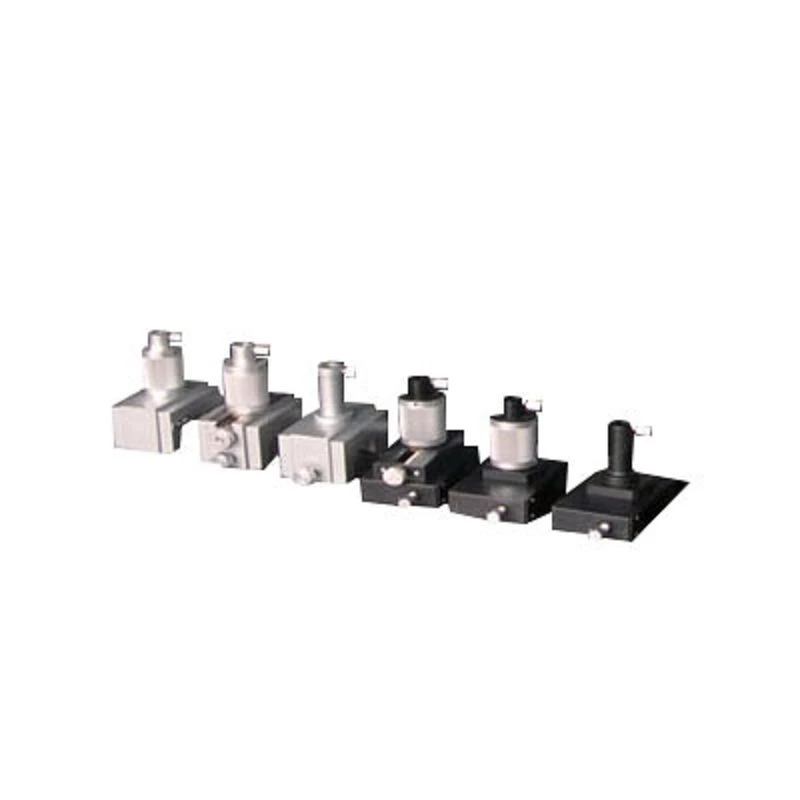

If you're interested in using optical bench equipment for your colorimetry experiments or any other optical applications, I'd love to have a chat with you. We can discuss your specific requirements and find the best equipment solutions for you. Reach out to us, and let's start a great partnership in the world of optics!
References
- Principles of Colorimetry, published by the International Commission on Illumination
- Optical Bench Experiment Manuals from leading manufacturers in the optical industry


