

1. Mechanical Instruments for University Physics Experiments
Our Mechanical Instruments cover six types of physics laboratory equipment for teaching experiments: simple pendulum motion, Young's modulus, weak vibration, moment of inertia, free fall, and liquid viscosity and surface tension.
Our product range includes:
- Simple Pendulum Apparatus (LB-SP)
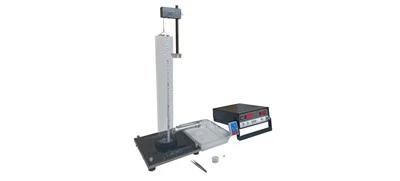
- Young's Modulus Experiment Apparatus (LB-YM-1)
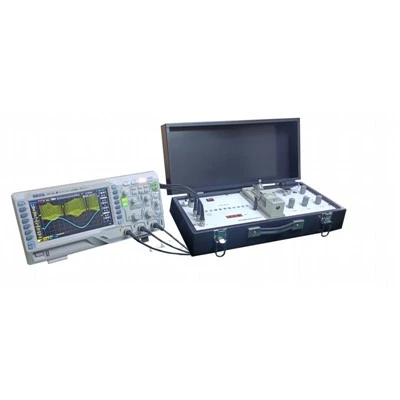
- Weak Vibration Measurement Apparatus (VM99-2)
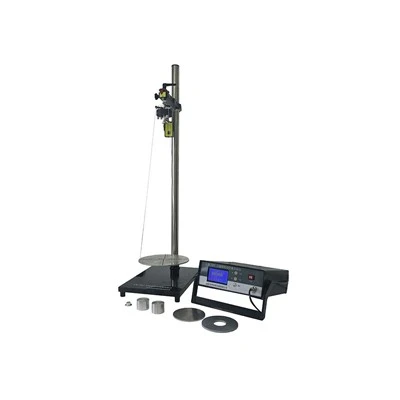
- Moment of Inertia Apparatus (LB-TPI)
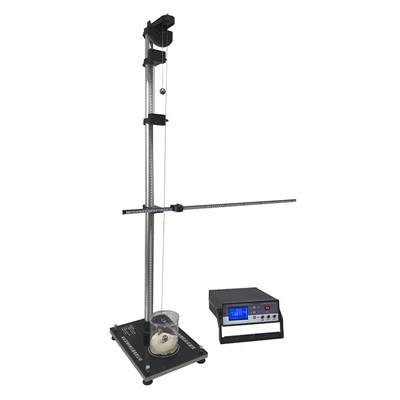
- Free Fall Apparatus (LB-FS)
- Liquid Viscosity and Surface Tension Experiment Apparatus (LB-TVC)
Each instrument is designed around a specific experimental procedure. The range combines mechanical structures, optical measurement, electronic timing, and data display to support practical physics experiments.


2. Mechanical Instrument Specifications
The following table provides the model-specific specifications and configurations for product selection.
| Product / Model | Specifications |
|---|---|
| Simple Pendulum Apparatus (LB-SP) | Overall height: 1150 mm; pendulum string length: 0–1000 mm, adjustable; pendulum angle: 0–50°; timing range: 0–999.99 s; timing resolution: 0.01 s; metal pendulum ball diameter: 20 mm ±0.1 mm; electromagnetic release; optical sensor for automatic counting; LCD display; storage for up to 5 groups of data, with 1–99 measurements per group. |
| Young's Modulus Experiment Apparatus (LB-YM-1) | Static tensile method; molybdenum wire length: approximately 60 cm; wire diameter: 0.18 mm; scale division: 0.05 mm; measurement uncertainty: less than 5%; CCD microscope magnification: 60×; color LCD display; CCD resolution: 480 TV lines; signal-to-noise ratio: ≥52 dB; video output: 1.0 Vp-p/75 Ω; eight 200 g weights and two 100 g weights; difference method and graphical method for data processing. |
| Weak Vibration Measurement Apparatus (VM99-2) | Double-grating configuration; semiconductor laser wavelength: 650 nm; laser power: 0–3 mW, adjustable; signal generator frequency: 100–1000 Hz; frequency adjustment accuracy: 0.1 Hz; output power: 0–500 mW; frequency meter range: 1–999.9 Hz; frequency meter resolution: 0.1 Hz; tuning fork resonance frequency: 510 Hz ±10 Hz; measurement accuracy: 5 μm; resolution: 1 μm; three Q9 interfaces; dual-channel headphone interface. Doppler effect demonstration accessory available as an optional configuration. |
| Moment of Inertia Apparatus (LB-TPI) | Overall height: 900 mm; upper disc diameter: 60 mm; lower disc diameter: 200 mm; lower disc mass: 300 g; lower disc position adjustment: ±5 mm; photoelectric timing; timing resolution: 0.01 s; counting range: 1–99 measurements; delayed counting: 1–10 measurements; storage for up to 5 groups of experimental data; LCD display. |
| Free Fall Apparatus (LB-FS) | Overall height: 1150 mm; pendulum string length: 0–1000 mm, adjustable; pendulum angle: 0–50°; timing range: 0–999.99 s; timing resolution: 0.01 s; pendulum ball diameter: 20 mm ±0.1 mm; free-fall steel ball diameters: 20 mm ±0.1 mm and 10 mm ±0.1 mm; electromagnetic release; dual timers for free-fall experiments and a single timer for pendulum experiments; counting range: 1–50 measurements; includes plumb line and ball-catching bucket. |
| Liquid Viscosity and Surface Tension Experiment Apparatus (LB-TVC) | Water as the experimental medium; transparent acrylic water tank: 80 mm outer diameter, 500 mm height, 74 mm inner diameter; base: 180 × 180 mm; force sensor sensitivity: approximately 2.76 V/N; measurement range: 0–0.098 N; nonlinearity error: ≤0.1%; power supply: 5 V; display resolution: 0.1 mV; aluminum alloy ring: 35 mm outer diameter, 33 mm inner diameter, 8 mm height; seven 0.5 g calibration weights; capillary tube length: 150 mm; timing range: 0.1–999.9 s; storage for up to 15 groups of timing data; remote-control timer included. |
3. Experimental Functions and Instrument Design
Simple Pendulum and Free Fall
The LB-SP uses an electromagnetic release mechanism and optical sensor for simple pendulum experiments. Automatic counting records repeated measurements, while the LCD displays timing data. Its adjustable pendulum length and angle provide two physical parameters for setting up experiments.
The LB-FS combines free-fall and simple pendulum experiments in one apparatus. Separate timing arrangements serve the two experimental procedures: dual timers for free fall and a single timer for pendulum motion. The supplied steel balls, plumb line, and ball-catching bucket form part of the experimental setup.
Young's Modulus Measurement
The LB-YM-1 uses the static tensile method with molybdenum wire and supplied weights to investigate material elasticity.
Its CCD microscope provides 60× magnification for observing measurement changes. The color LCD presents experimental data, and students can process the results using either the difference method or graphical method.
Weak Vibration Measurement
The VM99-2 combines a double-grating structure, semiconductor laser, signal generator, and frequency meter for weak vibration measurement experiments.
The adjustable laser power and signal generator frequency allow users to set experimental conditions. The tuning fork provides the vibration source, while the frequency meter supports frequency measurement. A Doppler effect demonstration accessory is available as an optional configuration.
Moment of Inertia Measurement
The LB-TPI uses a three-wire suspension structure with upper and lower discs for moment of inertia experiments.
The adjustable lower-disc position allows adjustment of the experimental arrangement. Photoelectric timing records the measurement data, and the LCD system stores up to five groups of experimental results.
Liquid Viscosity and Surface Tension
The LB-TVC combines two liquid-property experiments in one apparatus.
For surface tension experiments, the configuration includes an aluminum alloy ring and force sensor. For viscosity experiments, it includes a capillary tube and transparent acrylic water tank. Water is the specified experimental medium. The included calibration weights and remote-control timer support the measurement procedures.
4. Manufacturing and Quality Control
- Nanjing Longbow Scientific & Educational Instrument Co., Ltd. has been engaged in the research, development, and production of physics teaching instruments since 1999.
- Our manufacturing activities are supported by a technical team and factory facilities. Equipment listed for our production activities includes oscilloscopes, frequency meters, machine tools, program simulation equipment, and programmers.
- Our product range extends beyond mechanical instruments to optical instruments, thermal physics equipment, acoustic instruments, electrical instruments, and new energy experimental equipment. This gives customers access to equipment across several physics teaching disciplines through one manufacturer.
- Our company holds ISO 9001:2015 certification covering the production and service of university physics experimental instruments and equipment, with a published validity date of November 8, 2026.
- Our technical development also includes utility model patents related to Young's modulus and metal thermal expansion experimental apparatus.
- We provide pre-sales consultation, production progress updates, and after-sales follow-up to support product selection and order communication.
5. Request a Quote
- Contact us with the product name or model number, required quantity, and intended experiment.
- If you need the optional Doppler effect demonstration accessory for the VM99-2, include it in your inquiry.
- We can provide product information and a quotation based on your selected instruments and purchasing requirements.
As one of the most professional mechanical instruments manufacturers and suppliers in China, we're featured by quality products and good service. Please rest assured to buy customized mechanical instruments from our factory. If you have any enquiry about pricelist, please feel free to email us.
Free Fall Apparatus, mechanical instruments, Young Modulus Experiment Apparatus