

What is the weight of the Moment Of Inertia Apparatus?
Leave a message

When it comes to understanding the physical properties of objects in rotational motion, the Moment Of Inertia Apparatus plays a crucial role. As a leading supplier of this apparatus, I am often asked about various aspects of it, and one common question is: What is the weight of the Moment Of Inertia Apparatus?
Understanding the Moment Of Inertia Apparatus
Before delving into the weight, it's essential to understand what the Moment Of Inertia Apparatus is and what it does. The moment of inertia is a measure of an object's resistance to changes in its rotational motion. It depends on the mass distribution of the object and the axis of rotation. The Moment Of Inertia Apparatus is a device designed to measure the moment of inertia of different objects accurately.
This apparatus typically consists of a rotating platform, a set of weights or objects whose moment of inertia is to be measured, and a mechanism to apply a known torque and measure the resulting angular acceleration. By using the principles of rotational dynamics, such as Newton's second law for rotation ((τ = Iα), where (τ) is the torque, (I) is the moment of inertia, and (α) is the angular acceleration), we can determine the moment of inertia of the objects.
Factors Affecting the Weight of the Moment Of Inertia Apparatus
The weight of the Moment Of Inertia Apparatus can vary significantly depending on several factors:

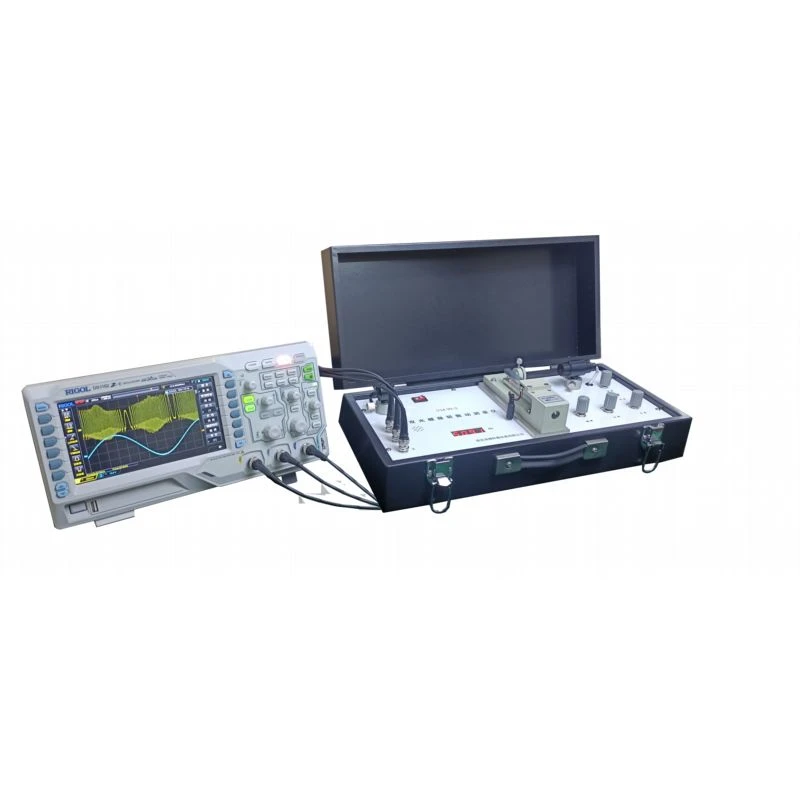
1. Material of Construction
The materials used to build the apparatus have a direct impact on its weight. For example, if the rotating platform is made of steel, it will be heavier compared to one made of aluminum. Steel has a higher density than aluminum, so for the same volume, a steel component will weigh more. Additionally, the weights or objects used in the experiment also contribute to the overall weight. These weights can be made of different materials such as brass, iron, or lead, each with its own density.
2. Design and Size
The design of the apparatus also affects its weight. A more complex design with additional components or features may weigh more than a simpler design. For instance, an apparatus with a built - in digital display for measuring angular acceleration or torque will likely be heavier than one without such a feature. The size of the apparatus is another important factor. A larger rotating platform or a more extensive set of weights will naturally increase the overall weight.
3. Accessories and Attachments
Some Moment Of Inertia Apparatuses come with various accessories and attachments. These can include pulleys, strings, and additional weights for different experiments. The presence of these accessories adds to the weight of the apparatus. For example, a set of precision - machined pulleys made of metal will contribute to the overall mass.
Typical Weight Ranges
Based on our experience as a supplier, the weight of a basic Moment Of Inertia Apparatus can range from a few kilograms to over 20 kilograms. A simple apparatus designed for educational purposes in a school laboratory may weigh around 5 - 10 kilograms. This type of apparatus usually has a relatively small rotating platform and a limited set of weights.
On the other hand, a more advanced and professional - grade Moment Of Inertia Apparatus used in research laboratories or industrial settings can weigh 15 - 25 kilograms or more. These apparatuses often have larger and more robust components, as well as additional features for accurate measurements.
Importance of Knowing the Weight
Knowing the weight of the Moment Of Inertia Apparatus is important for several reasons:
1. Transportation and Handling
When shipping or moving the apparatus, the weight is a critical factor. It determines the type of packaging required, the shipping method, and the handling equipment needed. A heavier apparatus may require special handling to prevent damage during transportation. For example, a large and heavy apparatus may need to be crated and shipped on a pallet, while a lighter one can be packed in a standard box.
2. Installation
The weight also affects the installation process. A heavier apparatus may require a more stable and sturdy surface for installation. It may also need additional support or anchoring to prevent it from tipping over during operation. In a laboratory setting, the floor or bench where the apparatus is placed must be able to support its weight.
3. Compatibility with Other Equipment
In some cases, the Moment Of Inertia Apparatus may need to be used in conjunction with other equipment. The weight can affect the compatibility and integration of the apparatus with other devices. For example, if the apparatus is to be used with a motorized drive system, the weight of the apparatus must be considered to ensure that the motor can provide sufficient torque to rotate it.
Related Apparatuses
In addition to the Moment Of Inertia Apparatus, there are several other mechanical testing instruments that are related to the study of physics. These include the Free Fall Apparatus, which is used to study the motion of objects in free fall and to measure the acceleration due to gravity. The Apparatus for Simple Pendulum is used to study the properties of a simple pendulum, such as its period and frequency.
The Young Modulus Experiment Apparatus is used to measure the Young's modulus of a material, which is a measure of its stiffness. And the Weak Vibration Measurement Apparatus is used to measure weak vibrations in various objects.
Conclusion
In conclusion, the weight of the Moment Of Inertia Apparatus is influenced by factors such as the material of construction, design, size, and accessories. Knowing the weight is important for transportation, installation, and compatibility with other equipment. As a supplier, we understand the importance of providing accurate information about the weight of our products to our customers.
If you are interested in purchasing a Moment Of Inertia Apparatus or any of our other mechanical testing instruments, please visit our website Moment Of Inertia Apparatus to learn more about our products and contact us for a detailed discussion on your requirements. We are committed to providing high - quality products and excellent customer service.
References
- Halliday, D., Resnick, R., & Walker, J. (2014). Fundamentals of Physics. Wiley.
- Serway, R. A., & Jewett, J. W. (2018). Physics for Scientists and Engineers with Modern Physics. Cengage Learning.


